You want your backyard in Orange County to feel warm, inviting, and uniquely yours. A well-designed fire pit can make that happen. Whether you’re gathering with family after a long day or hosting friends on cool coastal evenings, the right fire feature turns any outdoor space into a comfortable retreat where people naturally want to spend time. A cozy fire pit design blends function, comfort, and style to create a relaxing atmosphere that fits your lifestyle and the character of your Laguna Beach home.
At Lifetime Outdoor Living, you can explore practical ways to shape your outdoor space through thoughtful design, quality materials, and expert craftsmanship. Every choice—from paver layout and pit shape to seating distance and lighting—affects how the fire pit looks, feels, and works for everyday use. Understanding how these factors connect will help you make confident design decisions before committing to a layout.
This discussion focuses on how different design approaches influence comfort, atmosphere, and usability while staying true to the timeless appeal of a classic fire feature. You’ll see how a professional paving contractor can help you balance aesthetic goals with lasting performance, turning your backyard into a space built for both relaxation and connection.
When a Cozy Fire Pit Design Fits Your Backyard and Lifestyle
A fire pit adds both warmth and purpose to your outdoor area, but the best design depends on your space, habits, and surroundings. You’ll need to consider how you use your yard, how often you entertain, and how coastal weather patterns affect comfort and maintenance.
Yard Scale, Seating Needs, and Typical Evening Use
Your yard’s size will directly shape your fire pit choice. For smaller patios, a propane fire pit or compact gas fire pit table can provide heat without taking up much room. If you have a larger backyard, you can plan a wood burning fire pit or an in-ground fire pit surrounded by built-in seating.
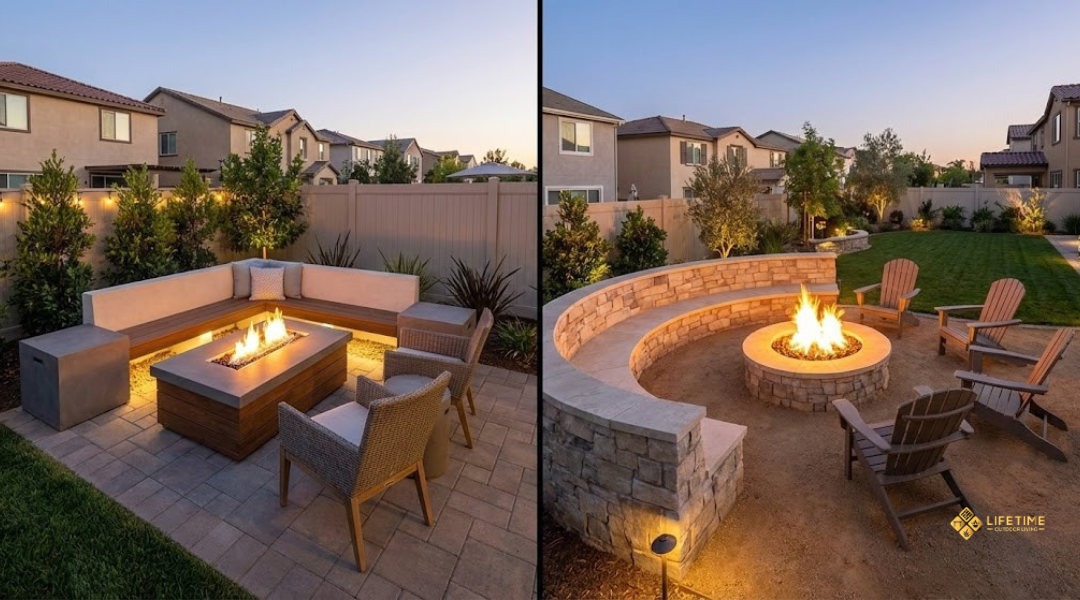
Make sure the seating and pit placement support the way you spend your evenings. Families often prefer circular seating for easy conversation, while smaller homes may benefit from a corner setup that saves open space. Use at least three feet of clearance around the pit for movement and safety.
If you host gatherings often, design a layout that allows several people to enjoy the warmth comfortably. A mix of movable chairs and fixed benches gives flexibility. Adding a sturdy surface for serving snacks or drinks will make the space more usable without expanding the footprint.
Coastal Climate Influence on Comfort and Layout Choices
Laguna Beach’s coastal weather influences both comfort and materials. The salty air and ocean moisture can wear down untreated metals, so stainless steel or copper fire pits age better than untreated steel. Stone, concrete, and high-density pavers also hold up well against salty breezes.
Because ocean evenings can cool quickly, consider wind direction and protection. A partial wall, privacy screen, or plant barrier can block drafts without trapping smoke. Gas and propane models perform best in coastal areas since they light easily and stay steady in mild wind.
Moisture and fog can affect ignition and fuel storage. Keep propane tanks covered and use heat-resistant mats to protect pavers from rust and staining. Choose weather-resistant covers to prevent corrosion and extend the life of your setup.
What This Design Discussion Covers and What It Does Not
This design discussion focuses on how you can shape a comfortable and attractive fire pit area in your backyard while keeping attention on form, function, and atmosphere. It looks at design choices that influence how your outdoor space feels and works for your family and guests.
Design Intent Versus Construction Specifications
This section focuses on conceptual fire pit ideas and layout planning, not the step-by-step technical details of building or engineering. You’ll explore how to decide between portable and built-in fire pits, what shapes and materials may fit your yard, and how seating or paving textures can define the space.
Your goal is to align the fire pit design with the overall intent of your outdoor area—relaxation, entertainment, or aesthetic cohesion. You’ll learn to think in terms of proportions, placement, and the interaction between the fire pit and its surroundings.
While construction specifications like depth, gas line placement, or exact measurements matter later, they fall under the scope of a licensed contractor. Lifetime Outdoor Living can translate your design ideas into practical solutions once your vision is clear. Until then, the focus remains on visual layout and user experience rather than code-level details or technical drafting.
Key focus points:
- Harmony with your patio or hardscape
- Choice between natural gas or wood burning
- Integration with existing landscape materials
Visual Comfort and Usability Rather Than Pricing or Permits
This section looks at how comfort and usability drive good fire pit design decisions for your backyard in Laguna Beach’s mild climate. You’ll consider seating height, walking space, lighting, and airflow that make an area practical and cozy.
The aim is to plan how people move, sit, and enjoy the fire safely. For example, low seating walls, circular layouts, and stone paver surfaces can create an inviting environment that feels open yet intimate.
Instead of addressing pricing or permits, which vary by project and local codes, the emphasis remains on how form and layout influence comfort. You’ll focus on proportions, materials, and spacing that make the design usable through different seasons.
A simple comparison of design factors can guide your thinking:
| Element | Primary Goal | Design Focus |
|---|---|---|
| Seating | Comfort | Height, spacing, material |
| Lighting | Safety | Glow control, visibility |
| Layout | Flow | Movement around the pit |
By keeping attention on these details, you build a space that works well and looks cohesive without needing to dive into administrative or cost topics.
How Fire Pit Design Creates Comfort and Atmosphere
The design of your fire pit affects not only how warm your space feels but also how your outdoor area encourages connection and relaxation. Proper layout, heat flow, and surface choices determine how comfortable it is to gather and how the fire visually ties your backyard together.
Heat Direction, Enclosure, and Seating Relationships
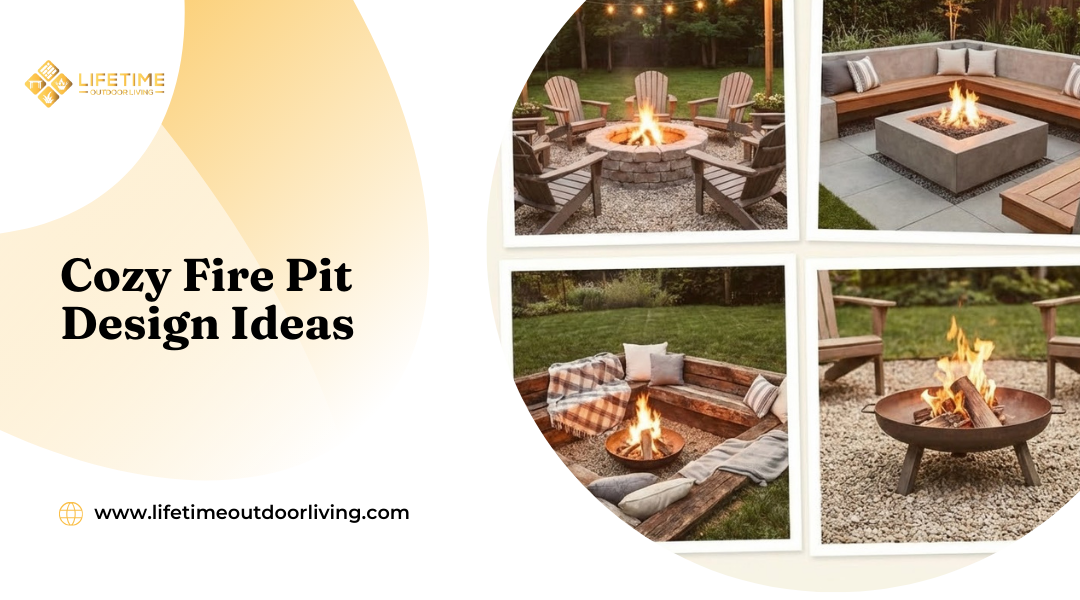
A well-planned fire pit layout centers on how heat moves and where guests sit. Round fire pits and circular fire pits naturally spread warmth, making them best for small groups. A rectangular fire pit focuses heat along its longer sides, which suits sectional seating or narrow patios.
Use a fire pit ring or low wall to block wind and direct warmth toward people. Wind direction matters—placing seating where breezes carry heat across the area improves comfort on cooler evenings.
For smokeless fire pits or metal fire pits, airflow control helps reduce smoke and keep warmth even. Arrange fire pit seating 18 to 24 inches from the edge to balance safety and heat. Pair cushioned chairs or built-in benches with open leg space so everyone feels close but not overheated.
Adding low retaining walls or planters behind seating can further enclose the area and trap warmth, creating a comfortable microclimate even in open yards.
Materials, Textures, and Finishes That Affect Warmth Perception
The materials that surround the fire shape both physical heat and how warm the space looks. Stone fire pits and concrete fire pits absorb and slowly release heat, creating steady warmth even after the flames fade. Their matte textures make light softer and more inviting.
Metal fire pits, especially those in steel or copper, reflect light sharply and heat up quickly. They give a modern appearance and make smaller flames appear brighter. Over time, patina on copper or rusted steel adds character and depth.
Finish colors also affect how cozy the space feels. Darker surfaces absorb and keep heat, while lighter finishes reflect light for a cooler tone. Combining textures—smooth concrete with rough stone, for example—adds interest and keeps the area from feeling flat.
When you align materials, seating, and lighting, the fire becomes both a source of comfort and a natural centerpiece for your backyard gatherings.
How to Evaluate Design Choices Before Committing to a Layout
Your design decisions should balance comfort, function, and long-term usability. Think about how people will move through the space, how heat and light will flow, and how permanent or flexible you want the setup to be.
Balancing Openness, Intimacy, and Circulation
Your layout affects how welcoming and usable your backyard feels. A fire pit placed too close to walkways can disrupt movement, while one set too far from seating areas can feel disconnected. Keep at least 3 to 4 feet of clear space around the fire pit for safe circulation.
Different placements create different moods. A sunken fire pit with sunken seating offers intimacy and blocks wind, but it limits visibility from the rest of the yard. An open patio layout feels more social and airy but may require a fire screen to manage sparks.
Use furniture and pathways to define how guests gather. For example, pairing a fire pit bench with freestanding chairs helps create zones for small group conversations. Choose the right pit type — tabletop fire pits work best for compact decks or balconies, while built-in or stone fire pits suit larger hardscapes.
| Design Choice | Best For | Key Consideration |
|---|---|---|
| Sunken Fire Pit | Wind protection & cozy layouts | Drainage and access |
| Portable Fire Pit | Seasonal flexibility | Stability and heat clearance |
| Central Patio Fire Pit | Large gatherings | Foot traffic flow |
Permanent Versus Adaptable Design Elements
Decide early which parts of your outdoor setup should stay fixed and which should allow change. A built-in fire pit or stone bench blends with hardscaping but requires thoughtful planning before installation. Once in place, relocating it can disrupt paving or gas lines.
If you prefer flexibility, a portable fire pit can serve as a temporary centerpiece that you move when entertaining larger groups. Using lightweight materials like metal or concrete allows quick repositioning.
Consider material maintenance. Lava rocks in gas fire pits retain heat efficiently and withstand weather, while natural wood-burning pits may need periodic cleaning and sealing. The more adaptable your layout, the easier it is to adjust seating, add décor, or expand your design later without major changes.
How Different Design Approaches Shape the Backyard Experience
The way you design your fire pit area determines how you and your guests experience outdoor living. Layout, materials, and seating choices each affect comfort, safety, and how well the space fits into your landscape.
Built-In Seating and Integrated Hardscape Concepts
A built-in seating setup creates structure and balance around your fire feature. Stone or concrete benches connect the space visually with pavers, retaining walls, or a low deck. This integrated approach keeps your design clean and long-lasting, especially when using materials that handle heat and weather well.
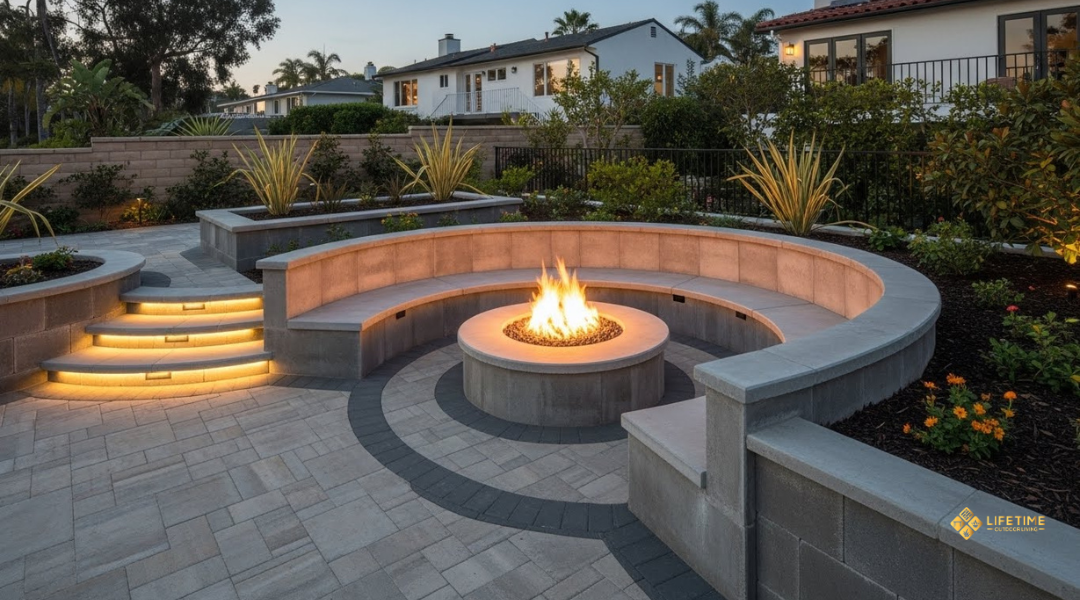
Raised planters with fire-resistant plants add greenery while improving safety. You can pair them with curved masonry benches to frame a circular fire pit, perfect for small group gatherings. Built-ins also reduce clutter, as you don’t need to move furniture in and out each season.
You can extend the surface area by continuing the same stone or tile pattern through pathways and patios. This makes your outdoor entertaining space feel larger and more cohesive. Lighting built into steps or beneath seat edges ensures visibility at night, improving both function and ambiance.
Flexible Furniture, Lighting, and Accessory-Driven Designs
If you prefer changeable layouts, flexible furniture setups allow more freedom. Weather-resistant sofas, Adirondack chairs, or modular sectionals can define a deck fire pit area while being easy to rearrange or store. You can adjust seating depending on group size or season without redesigning the space.
Accent lighting plays a major role here. String lights, lanterns, and low-voltage path lights help create a calm mood without permanent fixtures. Accessories such as throw pillows, outdoor rugs, and side tables add comfort and personality while keeping maintenance simple.
This flexible style works well in Laguna Beach’s mild climate, where you might use your outdoor area year-round. It gives you control over how formal or relaxed your outdoor entertaining setup feels, supporting both quiet evenings and lively gatherings.