
Enjoying a fire pit on a cool Orange County evening can make your backyard feel like an extension of your home. But every flame comes with a level of risk that’s easy to overlook when you’re focused on comfort and design. Knowing how to use, place, and maintain your fire pit safely protects your home, your family, and your investment.
At Lifetime Outdoor Living, you want your outdoor space to be as safe as it is beautiful. Laguna Beach homes often feature lush landscaping, wood decks, and coastal winds—all factors that require extra attention to fire safety. Understanding when fire pit safety becomes a concern, what practical steps to take, and how to maintain those habits over time can make the difference between peaceful evenings and preventable damage.
This guide walks you through how to evaluate fire pit safety before, during, and after use. You’ll see why thoughtful setup and consistent care shape a safer, longer-lasting backyard space. Whether you’re gathering around a built-in gas feature or a wood-burning pit, the way you manage your fire defines how confident you can feel enjoying your outdoor living area.
When Fire Pit Safety Becomes A Meaningful Concern For Your Property
Your yard’s size, layout, and location in coastal southern California each affect how safely you can enjoy a fire pit. Understanding how these factors interact helps you reduce fire hazards and protect your home from preventable risks.
Lot Size, Proximity To Structures, And Typical Backyard Layouts
In Laguna Beach, many properties sit on smaller or irregular lots. Limited space increases the chance that a fire pit sits too close to your home, fence, or plants. A safe distance—at least 10 to 20 feet away from structures—keeps heat, sparks, and smoke from reaching siding or eaves that could ignite.
You should also think about overhead clearance. Keep at least 12 to 20 feet of open space above the fire pit to avoid contact with tree branches, pergolas, or power lines. Material choice matters, too. Nonflammable surfaces like brick pavers, stone, or concrete help isolate heat and prevent stray embers from falling on wood decks or dry grass.
Many Laguna Beach backyards include outdoor seating areas, walls, or built-in features that can reflect heat. Use this to your advantage by arranging chairs or benches a few feet from the flame. If you have young children or pets, set clear boundaries and always supervise the fire.
Coastal Wind Patterns And Seasonal Usage Conditions
Onshore breezes define the local climate and directly influence fire pit safety. Even a moderate gust can carry sparks beyond your burn zone, especially on drier days. Before lighting a fire, check wind speeds under 10 mph and avoid use on red flag or high-wind days often issued in fall.
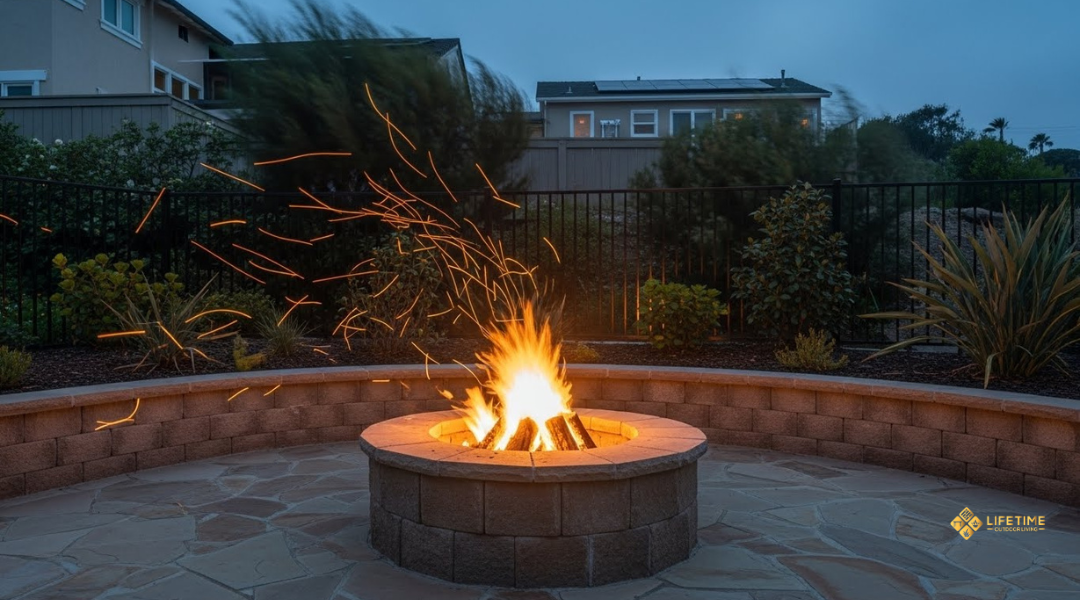
Wind direction changes throughout the evening. Place the fire pit in a naturally sheltered spot—such as behind a wall or hedge—but always allow open airflow to vent smoke safely. Do not operate fire pits near lightweight fabrics, patio umbrellas, or hanging string lights that could catch sparks.
During dry Santa Ana wind periods, embers may stay hot long after flames die out. Always douse the fire completely, stirring the ashes and checking for heat the next morning. Staying aware of these conditions helps you minimize the risk of smoke damage or a house fire while still enjoying your outdoor space.
What This Safety Guide Covers And Where Its Limits Are
This guide focuses on how to use and maintain an outdoor fire pit safely in a residential backyard. It provides practical advice for installation, operation, and placement but does not replace local fire codes, manufacturer instructions, or professional site assessments.
Residential Backyard Settings And Permanent Installations
You’ll find information focused on common backyard environments found throughout Orange County, including patios, decks, and landscaped areas. The guide applies mostly to permanent or semi-permanent setups such as built-in gas fire pits or stone-lined wood-burning fire pits installed by professionals.
Portable fire pits are also discussed because they are popular for smaller yards and rental properties. While these models offer flexibility, they require a flat, non-combustible surface and more frequent monitoring during use.
For fixed installations, you’ll learn the importance of clearances—typically at least 10 to 20 feet from structures, fences, or overhanging branches. You should also check that nearby materials like mulch, cushions, or decking are fire-resistant.
| Fire Pit Type | Safety Focus | Recommended Setup |
|---|---|---|
| Gas fire pit | Ventilation and fuel line inspection | Concrete pad or patio |
| Wood-burning fire pit | Ember control and spark screens | Gravel, stone, or fire brick base |
| Portable fire pit | Distance from combustibles | Fireproof mat or paver surface |
This content aims to help you handle fire pits used for outdoor leisure, not for cooking, open burning, or commercial purposes.
General Safety Principles Versus Site-Specific Requirements
The safety rules in this guide represent broad standards that apply to most backyards. These include maintaining safe distances, supervising active fires, and keeping water or a fire extinguisher nearby. Consistent practices—like checking the weather before lighting a fire and staying until embers cool—can prevent many accidents.
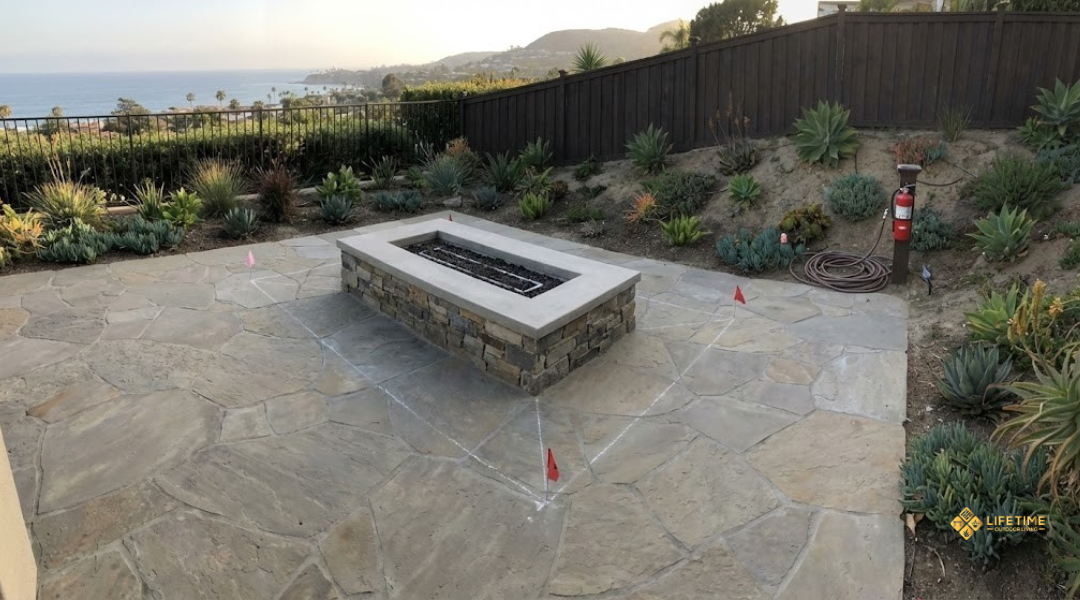
However, every property in Laguna Beach and surrounding communities has unique conditions. Local wind exposure, slope, landscaping materials, and property lines all influence your fire pit setup. County or city codes may limit open flames, especially in areas with wildfire risk.
You should always verify homeowner association policies, municipal permits, and manufacturer safety recommendations before finalizing any design or installation. This guide supports those guidelines but does not override them. Think of it as a foundation for informed decisions rather than an exact set of requirements for every home.
How Fire Pit Hazards Develop And Why They Matter
Even a small outdoor fire can create hazards through direct heat, airborne embers, and unsafe fuel use. Understanding how these risks start helps you prevent injuries, property damage, and costly repairs while enjoying your Laguna Beach backyard safely.
Heat Transfer, Embers, And Surface Ignition Risks
A fire pit gives off intense radiant heat that moves easily through metal, stone, and air. When built too close to fences, patio furniture, or dry vegetation, this heat can ignite nearby materials. Surfaces like wooden decks and resin furniture soften or warp when exposed to high heat for long periods.
Embers travel farther than you might expect. A light breeze can carry glowing particles several feet beyond the pit. These small sparks can catch dry tinder or leaves along the ground, smolder unnoticed, and start a new fire later.
To reduce these risks:
- Keep the fire pit 10–20 feet from structures or trees.
- Use a spark screen and ensure the fire sits on a non‑flammable base such as stone or concrete.
- Clear away combustible debris before lighting the fire.
Even minor heat exposure or a few stray embers can turn safe enjoyment into an emergency if not managed with attention to your surroundings.
Fuel Behavior, Airflow, And Human Interaction Factors
The type of firewood and how you light it affect both fire control and safety. Dry kindling or a clean fire starter helps you ignite the flame evenly without resorting to petroleum products like lighter fluid, which burn unpredictably and increase flare‑ups.
Air movement shapes how flames behave. Poor airflow can trap heat and cause rapid smoke buildup, while strong gusts lift embers outward. Arrange seating and screens so wind passes freely around, not through, the pit.
Human behavior also plays a major role. Leaving a fire unattended or stacking too much wood fuels high flames that exceed a safe height. Avoid throwing trash or treated wood into the fire, as it may release toxic fumes or explosive sparks.
A controlled flame, good spacing, and predictable airflow keep your gathering pleasant and reduce hazards before they form.
How To Evaluate Fire Pit Safety Before, During, And After Use
Safe fire pit use depends on correct placement, constant supervision, and proper extinguishing methods. Each stage of operation requires you to think ahead, act carefully, and prepare the right safety tools before lighting any flame.
Placement Logic, Clearance Zones, And Material Compatibility
Choose a stable, level surface made from non-combustible materials such as stone, concrete, or pavers. Avoid installing on wood decks or synthetic turf that can melt or ignite. Place your fire pit at least 10 feet from buildings, fences, or property lines. When space allows, increase that distance to 20–25 feet for extra protection.
Check for overhead clearance. Tree branches, patio covers, and power lines should sit well above and away from the heat zone. Use a simple rule—if heat is noticeable when you stand beneath something, it’s too close.
| Clearance Area | Minimum Distance |
|---|---|
| Structures/Fences | 10–25 feet |
| Overhead Branches | 12–15 feet above |
| Seating Area | 5–7 feet around pit |
Review the surface material’s compatibility with high heat. Fire-rated pavers and gravel reduce the risk of cracks or flare-ups. Keep fire safety equipment, including a Class A extinguisher, garden hose, and water bucket, within easy reach before you start.
Supervision, Weather Assessment, And Shutdown Considerations
Always assign one sober adult as the fire monitor. Their role is to watch flame height, guest behavior, and changing weather. Wind above 10 mph spreads embers quickly, so postpone lighting if conditions are gusty or dry. Always check local burn restrictions in your area of Orange County before starting any fire.
Keep children and pets outside a marked safety zone, using rope or stones to define boundaries. Avoid loose clothing near open flames, and use long tools for adjustments.
During use, watch for shifting fuel or sparks. The monitor should know how to operate a fire extinguisher and have emergency numbers accessible. When you’re done, stir the ashes and pour water slowly until all hissing stops. Confirm no heat remains by hovering your hand a few inches above the surface. Continue supervision until the pit is completely cool to the touch.
How Safe Fire Pit Practices Shape Long-Term Backyard Use
Safe fire pit routines protect your family and property, extend the life of outdoor materials, and reduce the chance of costly damage. Using proper tools, responsible fire-starting methods, and consistent safety checks builds a backyard that supports many years of comfortable use.
Design And Construction Implications For Safer Operation
When planning your fire pit area, spacing and materials matter. Place it at least 10–20 feet from your house, fences, and other flammable objects. Use non-combustible surfaces such as concrete, stone, or pavers rather than wood decking. A pit built on a stable, level, and fire-resistant base keeps heat from weakening nearby structures.
Install smoke detectors near household entry points if your pit sits close to the home. For multi-level homes, include escape ladders and review your fire escape plan so everyone knows exit routes during an emergency. If your home’s yard sits on a slope, factor in wind patterns to reduce smoke exposure and spark drift.
Use high-quality metal screens or glass guards to block embers. Choose a fuel type—wood, propane, or natural gas—and stick with the one your system is designed for. Avoid burning construction wood or debris. Each burn surface reacts differently to heat, and using proper materials helps avoid cracks or toxic fumes over time.
Ongoing Use Habits, Maintenance Awareness, And Risk Reduction
Developing safe habits makes long-term backyard enjoyment easier. Always check fuel lines, ignition systems, and vent openings before lighting a gas fire pit. For wood-burning versions, test the logs with a moisture meter—wood that’s too damp causes excess smoke and uneven burning.
Keep a shovel, water source, or extinguisher nearby, and check the ashes again the next day for hidden embers. Follow no-burn alerts issued during dry or windy conditions. Maintain 3–10 feet of clearance around the pit for furniture and keep children supervised within visible distance.
Wipe surfaces clean after each use to prevent buildup of soot, which can degrade finishes or stain patio stones. Replace spark screens, grates, and damaged burners as soon as they show wear. Taking these steps reduces fire risks and keeps your outdoor space dependable for many seasons.