Frequently Asked Questions
How does professional hardscaping address practical backyard issues like soil erosion and sloped terrain?
Professional hardscaping utilizes engineered retaining walls to stabilize uneven ground and prevent soil erosion. By transforming steep slopes into terraced, multi-tiered gardens, it maximizes your usable yard space and creates flat, functional zones for dining, gardening, or lounging.
What materials are recommended for high-traffic outdoor areas like pool surrounds in Orange County?
For high-traffic and wet areas, interlocking concrete pavers and natural flagstones are highly recommended. These materials provide durable, slip-resistant surfaces that withstand the elements, ensuring safety and longevity while requiring very little maintenance over the years.
How can I integrate lighting into my custom patio and hardscape design?
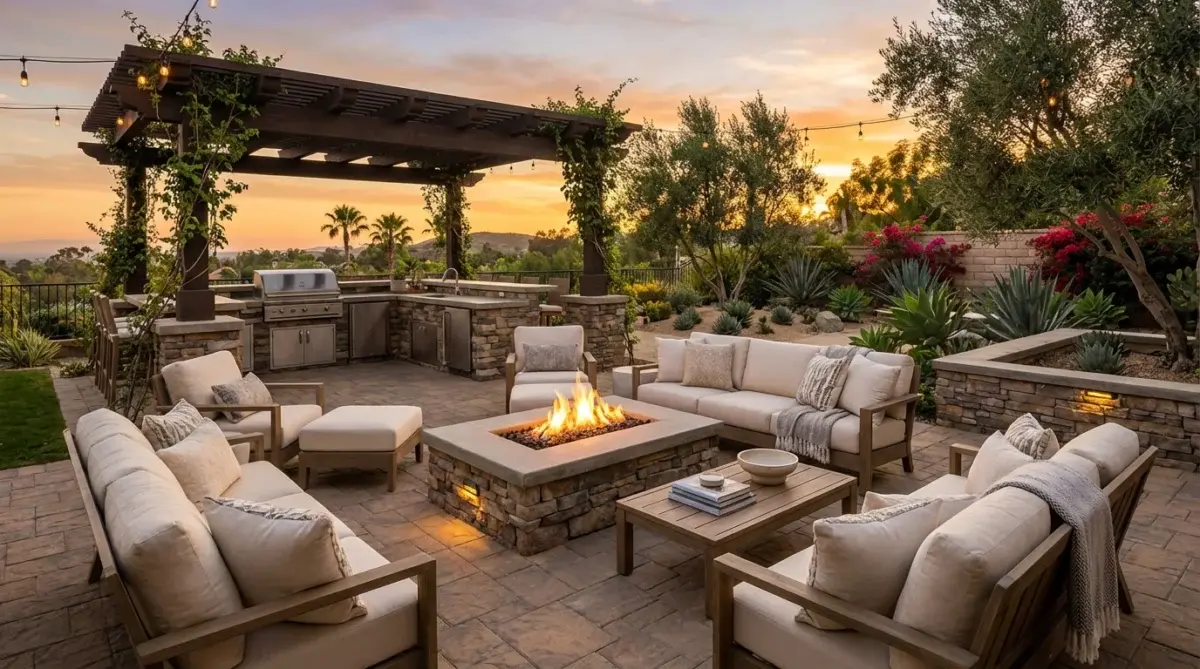
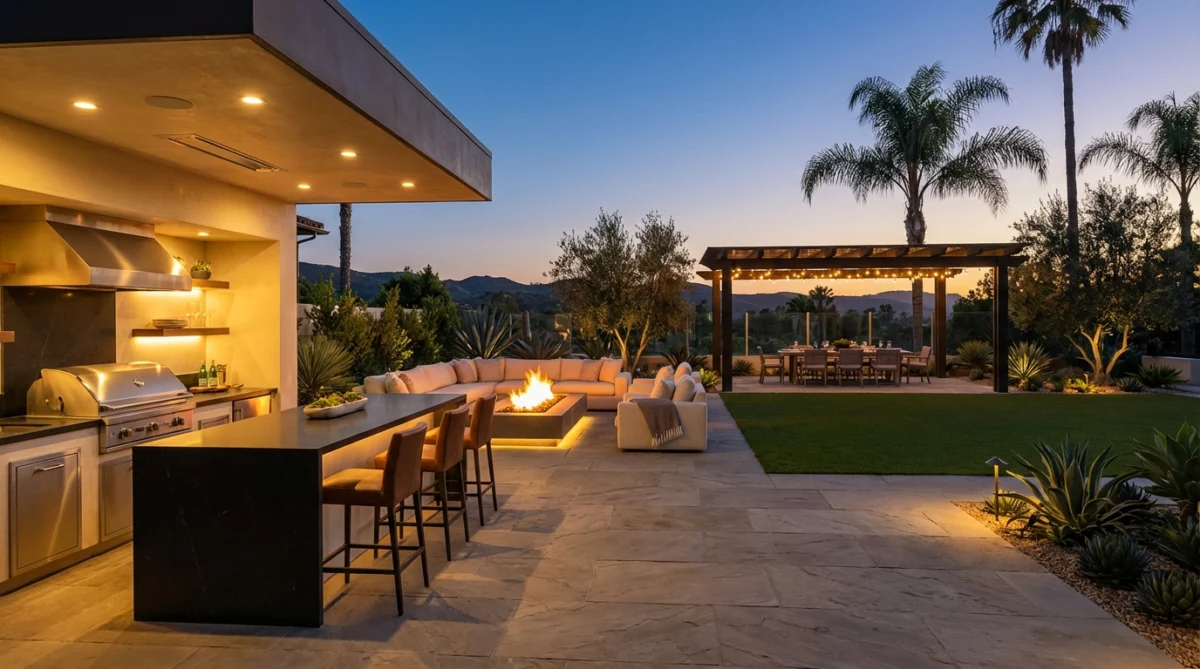
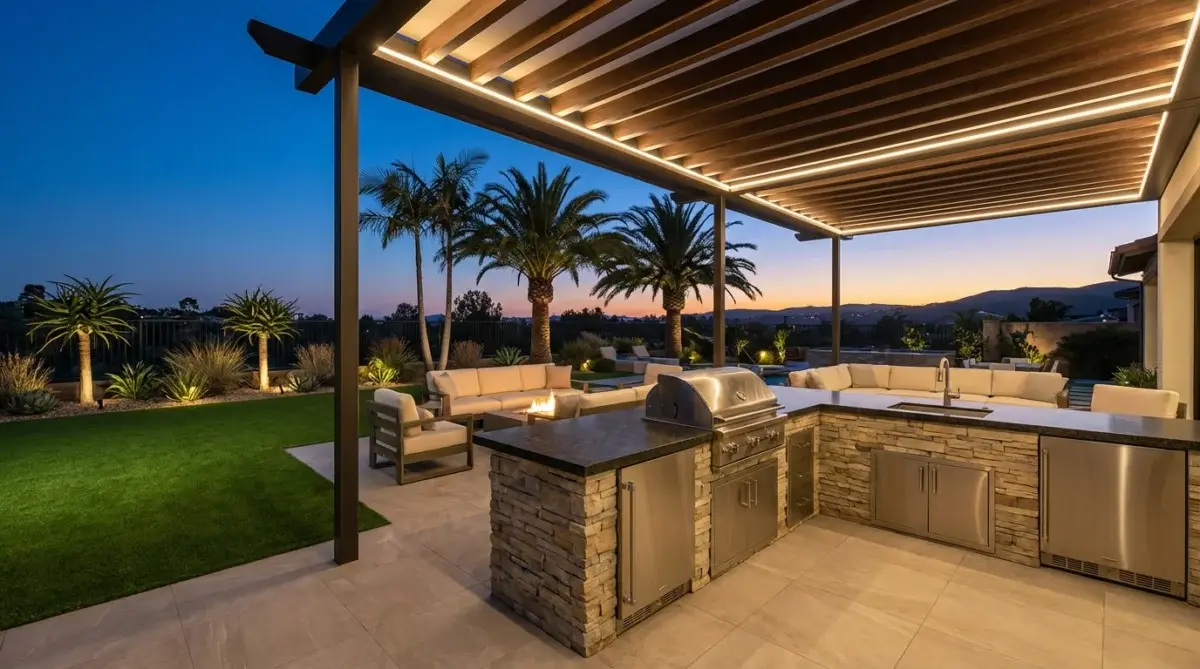
You can seamlessly integrate low-voltage LED lighting directly into your hardscape by tucking fixtures under wall caps and into steps. This strategic placement highlights the texture of the stone, enhances safety along pathways, and creates a warm, dramatic ambiance after dark.
Why is hardscaping considered a smart investment for Orange County homeowners specifically?
Orange County's mild year-round climate allows for continuous outdoor living. Investing in premium hardscaping like custom patios and stone pathways expands your functional living space, enhances curb appeal, and significantly boosts your property's overall market value.
Can hardscaping help define different functional zones in a large backyard?
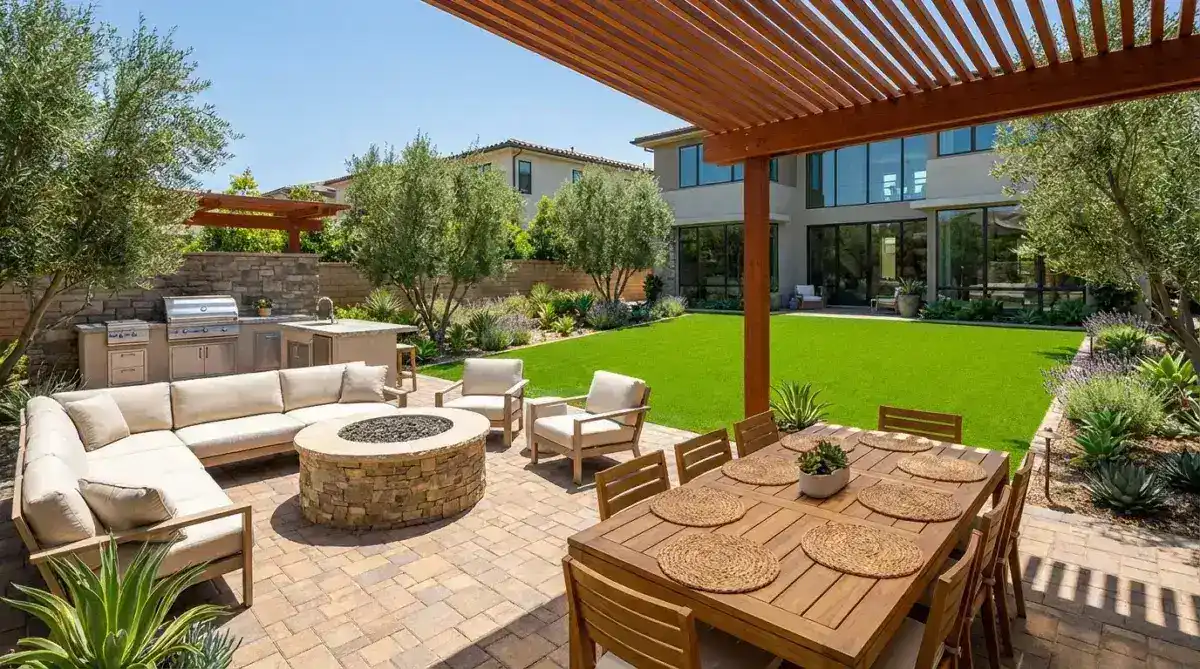
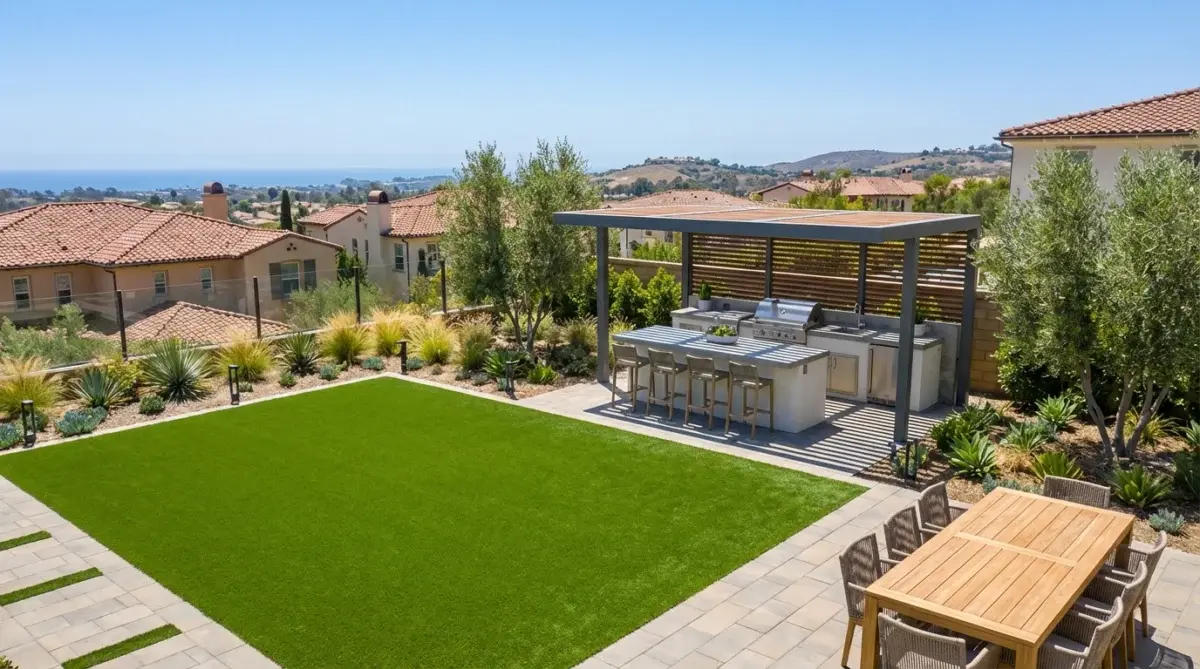
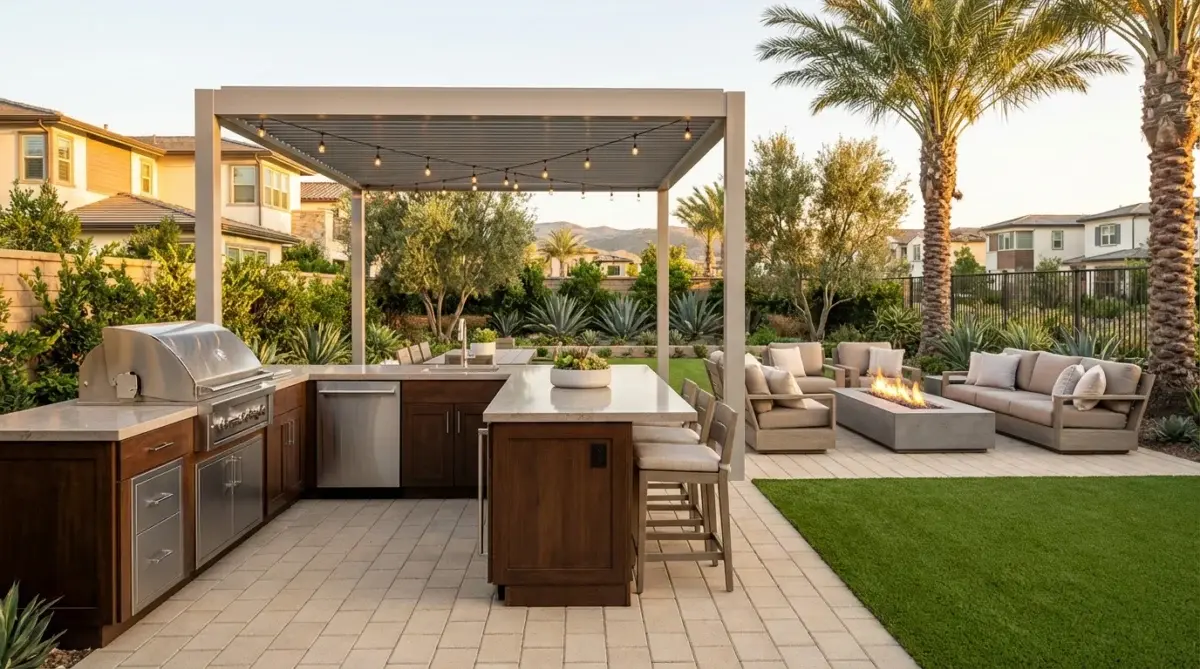
Yes, hardscaping acts as the structural anchor of your landscape. By using paved seating areas, retaining walls, and stone pathways, you can establish clear boundaries and guide guests naturally between distinct zones designated for dining, lounging, or entertainment.