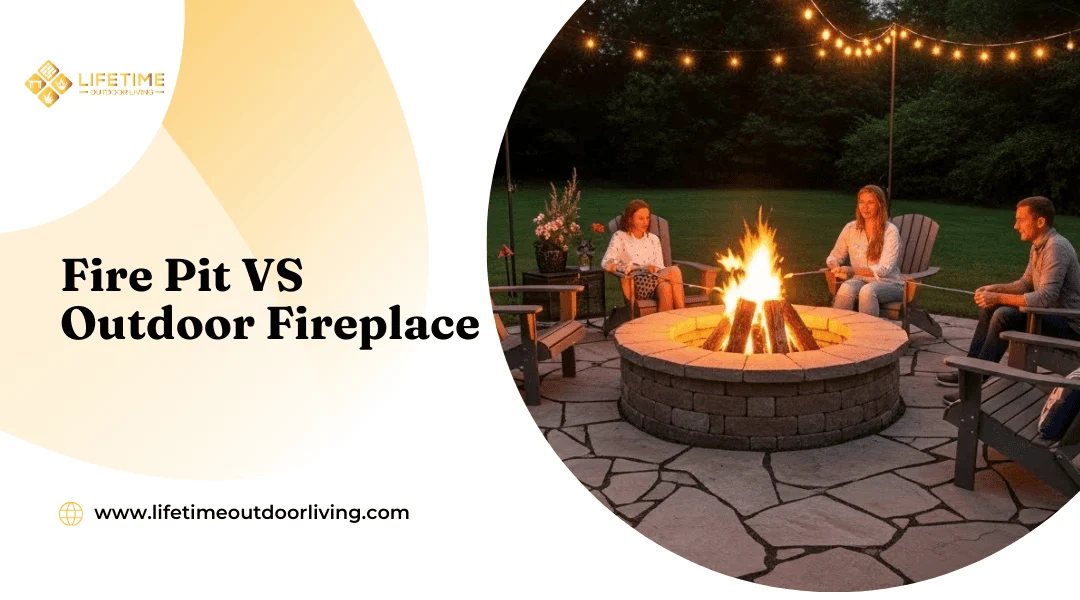
Choosing between a fire pit and an outdoor fireplace can shape how you enjoy your backyard in Orange County. Each option creates a different type of warmth, gathering style, and visual impact. If you want a relaxed, open social setting, a fire pit fits best, while an outdoor fireplace offers a structured, elegant focal point for more intimate settings.
At Lifetime Outdoor Living in Laguna Beach, you can design either feature to match your home’s layout and how you plan to use your space. Whether you want a built-in fireplace that ties into a patio or a freestanding fire pit set in pavers, the right choice depends on your yard’s size, your lifestyle, and the look you want.
This guide will help you understand how each option functions, when they make sense for Orange County’s climate, and what factors matter most before starting your project. By comparing both fire features, you can make a confident decision that enhances your outdoor living experience and adds lasting value to your home.
What You Will Understand About Fire Features In OC Outdoor Spaces
When exploring fire features for your Orange County backyard, you’ll learn how each option shapes your outdoor living area. A fire pit invites open conversation and relaxed gatherings, while an outdoor fireplace gives your patio a more structured and cozy feel.
You’ll understand how heat output, fuel options, and design style influence your comfort and maintenance needs. Fire pits often use wood or propane and distribute warmth in all directions. Fireplaces, built with brick or stone, direct steady heat forward and can double as a focal point for your space.
| Feature | Fire Pit | Outdoor Fireplace |
|---|---|---|
| Atmosphere | Casual, social | Warm, formal |
| Heat Direction | All-around | Forward-facing |
| Smoke Control | Moderate | Easier to contain |
| Fuel Type | Wood or propane | Mostly wood |
| Design Impact | Low profile | Built-in structure |
You’ll see how these features complement OC’s mild climate and outdoor lifestyle. A paving contractor like Lifetime Outdoor Living can help you integrate fire elements with patios, seating walls, and walkways, creating a continuous flow in your landscape.
You’ll also gain a better sense of space planning and safety spacing, such as how far to keep structures or plants from the flame area. From the layout to the building materials, understanding these basics helps you design a backyard that fits your routine and enhances how you use your outdoor space year-round.
When A Fire Feature Makes Sense For Your Backyard Layout And Climate
Adding a fire feature should balance comfort, safety, and function. The right setup depends on how much space you have, how you use it, and how local weather affects heat, smoke, and seating design. Practical planning helps ensure your outdoor area feels comfortable year-round.
Yard Size, Seating Patterns, And Typical Use Scenarios
Your yard’s layout largely determines whether a fire pit or fireplace fits best. A freestanding fire pit works well for open spaces that invite circular seating and casual gatherings. Its 360-degree flame view encourages conversation and suits families who host barbecues or informal parties.
In smaller patios or tightly designed courtyards, an outdoor fireplace uses vertical space efficiently. It anchors one side of the area and directs attention toward the hearth, allowing furniture to fit neatly around it. The taller structure also acts as a design focal point, complementing built-in seating or outdoor kitchens.
| Feature | Fire Pit | Fireplace |
|---|---|---|
| Ideal Space | Open or large yards | Smaller or structured patios |
| Seating | Circular or flexible | Linear or sectional |
| Visual Focus | Center of space | Against wall or structure |
If you prefer spontaneous seating and open layouts, a fire pit offers flexibility. If you value defined boundaries or privacy, a fireplace provides a clearer structure.
Coastal Wind, Evening Temperatures, And Smoke Considerations
Laguna Beach’s coastal breeze often influences where you place and how you design a fire feature. Stronger winds can scatter smoke from a fire pit, so positioning it away from seating or adding a wind break helps maintain comfort. An outdoor fireplace performs better in breezy areas since its chimney channels smoke upward and out of sight.
Evening temperatures tend to dip near the ocean, making consistent heat output important. A fireplace’s enclosed design concentrates warmth, which is beneficial on cooler nights. A fire pit can still work well if you use wind-resistant designs or gas-burning models that produce less smoke and steadier flames.
You’ll want to check seasonal wind direction and airflow before choosing a location. Planning with the microclimate in mind lets you enjoy warmth without dealing with unwanted smoke or uneven heat distribution.
What This Comparison Includes And Where The Boundaries Are
This comparison focuses on practical design, cost, safety, and installation factors that matter when adding a fire feature to your Laguna Beach home. It considers how a fire pit or outdoor fireplace fits the space, your intended use, and local building standards that influence construction and maintenance.
Design, Function, And Permanent Installation Assumptions
For clarity, this comparison looks at built-in backyard fire features rather than portable models. Both fire pits and outdoor fireplaces are assumed to be integrated into a paved or landscaped area and constructed with materials such as brick, stone, or concrete. This focus helps reflect what most homeowners in coastal Southern California install for long-term use.
Functionally, fire pits create open seating around the flame for casual, social gatherings. Fireplaces, by contrast, direct heat forward and provide a more defined seating arrangement suited to smaller groups or private settings. Electric fireplaces are mentioned where relevant; while they do not burn fuel or need smoke ventilation, they offer a similar visual appeal in covered or semi-enclosed outdoor spaces.
| Feature | Fire Pit | Outdoor Fireplace |
|---|---|---|
| Seating Layout | 360° around fire | Front-facing |
| Venting | Open air | Chimney or vent |
| Mobility | Often fixed, some moveable | Fixed structure |
| Fuel Options | Wood, gas, propane | Wood, gas, electric |
When assuming permanence, both features require solid foundations and weather-resistant materials to meet safety and durability needs in coastal climates.
Cost, Code, And Maintenance Topics Addressed At A High Level
Costs and code considerations vary depending on design complexity, chosen materials, and energy source. A custom-built fire pit may cost a few thousand dollars, while an outdoor fireplace can exceed $15,000 due to chimney work and masonry labor. Electric fireplaces cost less to install but may require dedicated wiring and weatherproof housings.
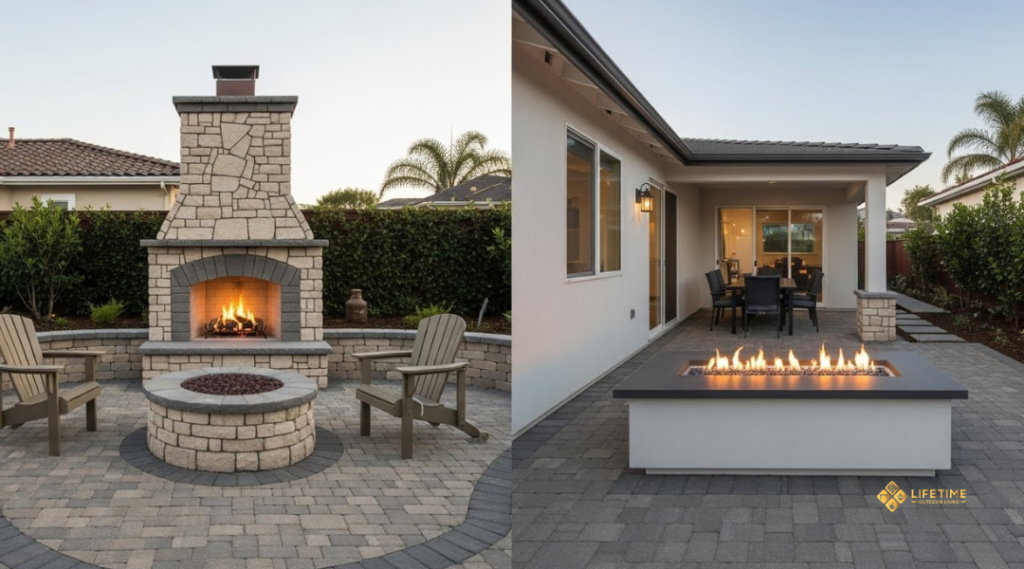
You should assume that local codes in Laguna Beach require proper setback distances, gas line inspections, and smoke or spark control where wood is used. These standards help reduce fire risk in densely developed neighborhoods.
Maintenance also differs. Fire pits accumulate ash and debris more often, while fireplaces may need periodic chimney cleaning. Gas and electric units simplify upkeep by avoiding soot buildup and offering push-button ignition. Regular visual inspections for cracks, leaks, or corrosion protect both safety and function over time.
How Fire Pits And Outdoor Fireplaces Actually Work
Both fire pits and outdoor fireplaces rely on controlled airflow, heat distribution, and safe fuel systems to create steady flames. Their designs affect how the fire burns, how much warmth it produces, and how you experience the light and heat around it.
Heat Behavior, Airflow, And Flame Exposure
A fire pit gives off heat in every direction. The open bowl design releases flames and warmth outward, making it easy for people to gather around. Because air can flow freely across the surface, combustion stays steady, and the temperature remains consistent across all sides.
In contrast, an outdoor fireplace directs heat in one direction. The enclosed firebox and chimney pull fresh air from below and vent smoke upward, keeping the immediate area cleaner and more wind-protected. This setup concentrates warmth toward the seating area instead of dispersing it all around.
Many gas fire pits use stainless steel burners for durability and even heat output. You can add lava rocks or fire glass around the burner for heat retention and a finished look. Optional glass wind guards help stabilize the flame when breezes sweep through your yard.
Fuel Types, Ignition Methods, And Structural Requirements
You can choose between wood-burning or gas-powered systems. Wood fires offer natural crackling and aroma but need ventilation space and regular cleaning. Gas systems, especially propane fire pits, light quickly using manual push-button igniters or electronic starters and produce consistent flames with minimal residue.
All fire features need a solid, heat-safe base like pavers or stone. Gas units must connect to an approved fuel line laid by a professional to prevent leaks. A well-designed setup includes proper clearance from nearby structures and materials. For fireplaces, the chimney height, venting system, and firebox dimensions all influence efficiency and safety.
How To Evaluate Which Option Fits Your Space And Priorities
When deciding between a fire pit and an outdoor fireplace, you should assess how each one affects space usage, comfort, style, and long-term goals. The right choice depends on how you use your backyard, the level of flexibility you need, and how it connects with existing hardscaping.
Usability, Comfort, And Social Interaction Patterns
Consider how you and your guests typically use your outdoor space. A fire pit, especially a portable fire pit or propane fire pit table, works well if you like casual gatherings where everyone can sit in a circle and talk easily. Its open design lets heat spread evenly and allows more seating flexibility.
An outdoor fireplace, in contrast, offers a more structured layout. It suits backyards where you want a defined focal point or prefer a wind-protected, directional source of heat. Families who often host smaller groups or want a cozy lounging area may find this design more comfortable.
If convenience ranks high, a fire table or fire pit table may fit best. Many models light quickly, burn cleanly, and require little maintenance. Compare fuel options, wood for a natural experience or propane for low smoke and easy ignition. Evaluate spacing too; you’ll need several feet of clearance around any open flame for both comfort and safety.
| Feature | Fire Pit / Fire Table | Outdoor Fireplace |
|---|---|---|
| Seating | Circular, social | Front-facing |
| Mobility | Often portable | Fixed structure |
| Warmth | Even, all-around | Directional, concentrated |
Visual Impact, Permanence, And Integration With Hardscaping
Think about how each option will look and function as part of your landscape. A fireplace creates a permanent focal point that can match your home’s architecture with materials like stone or brick. It anchors patios or covered outdoor rooms and works well if you want a built-in, lasting feature that adds structure to your yard’s design.
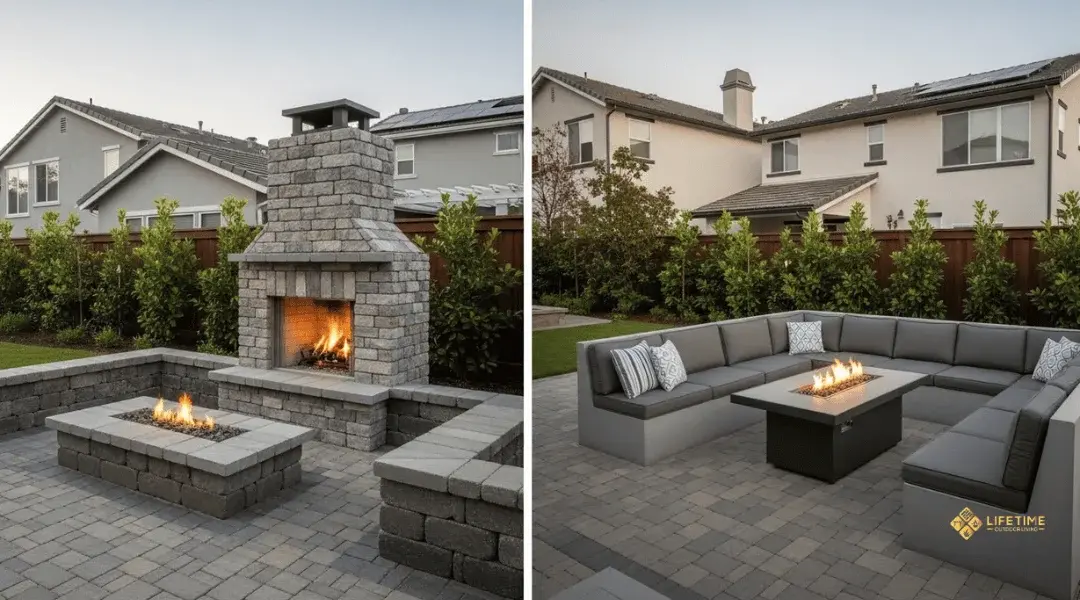
A fire pit, especially a portable or table-style version, blends better when you want flexibility. You can move it to adjust for seasonal seating or rearrange furniture layouts. This design also suits smaller yards where space changes often.
When working with your contractor, plan for integration with pavers and retaining walls. Aligning materials and colors ensures the fire feature complements your patio’s surface. Consider ventilation, access to propane lines, and how lighting or seating will frame the area. Your goal is a setup that feels intentional, balanced, and easy to maintain over time.
How Each Option Shapes Outdoor Living Outcomes In Orange County
A well-designed fire feature affects how you use your outdoor space and how often you spend time outside. The right choice depends on your yard’s layout, your entertaining style, and how you balance comfort with design practicality.
Fire Pit Implications For Flexibility And Gathering Styles
A fire pit creates open seating that fits Orange County’s mild climate. You can use it year‑round for small gatherings or family evenings without changing your patio layout. Because heat and light spread in all directions, everyone around the pit shares the same warmth and view.
Your placement options stay flexible. Fire pits can sit in the middle of a paved patio, near pool edges, or within a gravel fire circle. A gas fire pit offers quick ignition and no ash, while a wood-burning fire pit brings a more natural look and sound.
| Key Traits | Description |
|---|---|
| Seating Style | 360° social layout |
| Heat Coverage | Even, open warmth |
| Maintenance | Minimal for gas; more for wood |
| Cost Range | Usually lower than fireplaces |
Most homeowners favor fire pits when they want a casual, social feel. With the right paving design, you can make it both a visual focal point and a laid‑back gathering spot.
Outdoor Fireplace Implications For Structure And Enclosure
An outdoor fireplace adds height and direction, helping define separate living zones in your yard. The structure often includes a chimney that shields flames from ocean breezes, a useful feature near Laguna Beach. Seating naturally faces forward, creating a calm, enclosed space for smaller groups.
The design pairs well with covered patios or pergolas, making your outdoor area feel like an extension of your indoor living room. A wood-burning fireplace brings authentic smoke and crackle, while gas models stay cleaner and easier to maintain.
| Design Element | Effect on Space |
|---|---|
| Vertical Structure | Acts as a backdrop or wall |
| Wind Resistance | Increases comfort |
| Seating Layout | Focused and intimate |
| Visual Impact | Strong architectural presence |
You gain a refined, anchored look that fits a structured outdoor plan. This style suits you if your goal is a defined outdoor room that feels private and sheltered.
Frequently Asked Questions
How do Orange County's coastal winds affect the choice between a fire pit and an outdoor fireplace?
Laguna Beach's coastal breezes can disrupt a fire pit's open flame, causing smoke to swirl unpredictably toward your guests. An outdoor fireplace is much better suited for windy coastal areas because its tall chimney and enclosed structure naturally redirect smoke upward and shield the fire, ensuring a more comfortable and smoke-free seating area.
Which fire feature is more space-efficient for a smaller Orange County patio?
An outdoor fireplace is highly space-efficient for tight patios or courtyards. Because it is built vertically against a wall or property boundary, it leaves the center of your patio open for furniture. Conversely, a fire pit requires clearance on all sides for safe seating, which can quickly crowd a smaller backyard layout.
Can I integrate built-in seating with both fire pits and outdoor fireplaces?
Yes, but the seating layouts differ significantly. Fire pits pair best with circular or curved built-in stone benches that encourage 360-degree social interaction. Outdoor fireplaces work best with linear built-in seating, L-shaped sectionals, or retaining walls that face the hearth, creating a structured, living-room-style outdoor setup.
Which option provides better heating efficiency during chilly Southern California evenings?
An outdoor fireplace offers more efficient, directional warmth. Its brick or stone structure absorbs heat and radiates it forward, creating a cozy pocket of warmth in front of the hearth. A fire pit distributes heat in all directions, which is great for large groups but less concentrated, meaning warmth can easily dissipate in an open breeze.